Showing posts with label Jefferson. Show all posts

Thursday, July 10, 2014

Kayak Rating for Damariscotta State Park

A very pleasant, picturesque, and enjoyable lake with facilities, swimming, and very vocal loons.


Damariscotta Lake State Park is a protected area in Jefferson, Lincoln County in Maine's Mid-coast region. The park encompasses Damariscotta Lake, which is 12 miles long.

KAYAK RATING: 5 KAYAKS                


The park has a clean swimming area, well-maintained "facilities", and lots of picnic tables and grills, making it a great place for a family outing. While there is no actual boat launch in the park, they do allow kayaks to be launched just to the side of the roped-off swimming area. There are public boat ramps on the southern end of the lake, and residents do have their share of motor boats but, overall, the traffic is not too heavy.


 Entrance. Folks 65 and over get in free. Adults $4

 Parking

 Beach. Launch area just past the trees.


 The swim area is roped off.

 Part of the beach


 Loons abound on the lake
We'll be on this lake a number of times this summer. It's only seven miles away and much more to explore.

Friday, June 20, 2014

Images From 2013 Kayaking

Since we started this blog this year, we will give fresh reviews of the lakes we have and will visit. But we thought we'd show some pics from last season.

This is heading into Rockport Harbor:

:
Getting ready for Damariscotta Lake
Megunticook Lake, Camden

Seven Tree Lake, Union
One of three Megunticook Landings
Callie on Clary - Not her favorite activity, too hot in the bright sun.
The Landing at Seven Tree
Peaceful Megunticook Waters

Over the course of the summer, we'll provide details of locations as well as additional reviews.

HAPPY PADDLING!


Friday, May 23, 2014

What You Need-Clary Lake Part II

Obviously, there are some 'must have' items for going on the water. We also discovered some issues with what we bought and offer comments on the equipment.

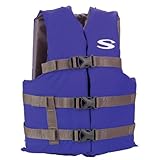
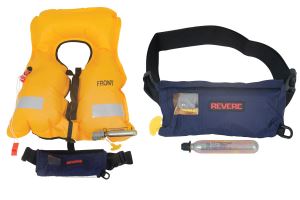
Item 1-Life vest. We got vests at a local box store. Overall prices are reasonable, but we later discovered that some general style vests are not very comfortable when paddling. They can be bulky and rub under the arm pits and can ride up your back. Product Details  We would recommend vests more suited for fishing or specifically for paddling. They can be more expensive but worth it for comfort. Product DetailsPFD Inflatable Belt Pack
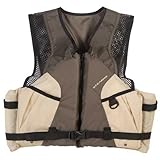
You want less padding under the arms and on the back.

Here's a note from SeaEagle.com:
About Personal Flotation Devices
Essential for boating safety, Personal Flotation Devices are mandated by the U.S. Coast Guard for every occupant of a motorized vessel and strongly for kayaks. Not having the required PFDs aboard could lead to an expensive ticket, so it's much better to be safe and legal.

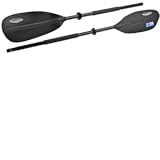
We used the paddles, 84", that came with the kayaks our first time out. Our conclusion: give them away or save 'em for emergencies. They are too short and are not contoured, which makes for harder paddling.
Far superior are the 96" contoured. The water flows off better and it's easier on the shoulders.

Product Details
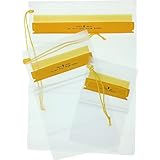
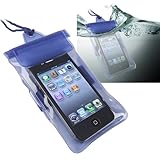
Waterproof bags are important. You'll want to keep your wallet, phone, keys, camera, and any other things you feel you must have, dry. We suggest going a size up from what you think you need. We found that products simply do not allow enough space for thicknesses of stuff.
  Product DetailsProduct Details And keep in mind that we're only talking about going out for a few hours, not necessarily all day or for several days, although that is also an option (which obviously requires additional gear). So if you want to picnic on an island, you want small coolers and  bags to hold other stuff. We prefer bags with cords that we hung around our necks or that we can clip to our life vests (for small stuff), and/or bags that would float and could be clipped to the kayak ... just in case. Don't go cheap or too small.

Since you're out in the bright sun, hats, bottled water (non-BPA; glass is best), and sun glasses are a must. We have a line clipping the water bottle to the kayak; our hats are broad brimmed and with a chin strap (in case the wind kicks up). Glasses have flotation straps attached.
 
Be sure to get a pair of boat shoes. You'll be getting in and out of the water from boat launch (and other) areas and you'll want something on your feet. We also attached a whistle to our vests in case of emergency (this is mandatory in Maine if you're on the ocean).

Two absolute essentials, in our opinion, to have with you are a small repair kit and the air pump. They're easy to stow in the storage area of the kayak, are hopefully never needed, but it's not a bad idea to stow this gear on board.

Our first sojourn on the lake lasted just a few hours. Our goal was to get acquainted with the kayak and how it handled. We found that the upper body, shoulders in particular, got the most exercise. It is also important to realize that the distance that you paddle out is the distance you paddle back, so keeping an eye on stamina levels is important.

It is also worth noting that it was easy to just toss the kayaks into the bags and into the back of the car. When we got home there was no lifting kayaks from the car roof, finding a storage space and dealing with roof racks. For a boomer, the process was fairly simple and easy.

We slept well that night.

Sunday, May 18, 2014

On Clary Lake-First Time Out Part I


Clary Lake is a Great Pond located in Lincoln County Maine in the towns of Whitefield and Jefferson. It is about 680 acres in size and is part of the Sheepscot River Watershed.

As soon as the kayaks arrived we inflated them on the lawn, checking for any glitches, leaks or other problems that might arise with their first use. It was a simple process, and any concerns about quality of the the material used were laid to rest. The material was quite thick and seemed very sturdy.

We did discover one issue regarding getting the kayaks totally deflated and fitting them into the provided carrying bags. This was later resolved by using the larger K2 bag for the smaller Challenger and buying a larger duffel type bag for the K2, which we nicknamed the 'banana boat' for obvious reasons.

We were aware that there was a potential problem with the skegs, that ever-so-important fin on the bottom of the rear of the boat, on these two models, since, in our research, we saw a review on Amazon that mentioned this. Well, first time out, the Challenger lost its skeg. On these models they slide in, back to front, via a grooved  piece on the bottom. So, if you drag the boat or scrape something in the water, they can slide out. Our solution to this was to drill a small hole in the skeg and secure it to one of the lines on the back of the boat. That way, if it does come off, at least it's not going to sink to the bottom of the deep blue sea.

(from Amazon.com, not posted by us) COMPLAINT: Intex ... has deplorable customer service. I tried to get a new skeg and after lots of run-around, I gave up.

I personally like the openness of the K2. It is meant for two and there is room for our small dog (although we didn't take her out on our maiden voyage, she has gone with us several times since). We put a yoga mat on the floor to prevent her from her nails from puncturing the rubber. I will admit that we were overly cautious about this. The rubber is very thick.

The problem with the K2 is that placement the seats is severely limited. I like back support and to achieve a comfortable level, the seat had to be placed far back. When there is only on person in the boat, this throws the maneuverability off, especially in a wind. Also, the seats are not well designed and are a bit on the cheap side. It did take two of us to carry the boat to the water, not so much because of the weight, but it is long and a bit awkward for one person to carry.

The Challenger is more comfortable, especially if you're not too tall. The seat is right up against the rear of the cockpit which adds support (it has the same seat as the K2). Even though the leg room is a bit cramped under the front, you can sit in an Indian style position to change up the positioning. In fact, we bought a second Challenger. The only style of  Challenger, despite pictures to the contrary on Amazon, is the one in the photos on this blog: the green one. We ordered the blue/gray one and the green one came. Amazon apologized and sent what was supposed the be the correct style next day shipping and with a free return slip for the one we'd just received, but, nope, the one that came the second time was still the green one. We gave up and just kept the green.

Set up time for the inflatables is about 15 minutes on the front end and 20 on the back. It is a bit difficult, because of the placement of the nozzles for inflation, to get all of the air/water out. At the end of the season we had to inflate the boats at home and dry them out with a cloth and a few hours in the air out of the direct sun. It was easy to load and unload the boats in their bags once we switched out the bags.

Clary Lake is quiet. The several times we've been there we've only encountered a canoe and a pontoon boat. You can spot fish jumping out of the water, loons, ducks and an assortment of other birds. It was a great place for our first outing and we will continue to visit this lake.